Rug Reweaving & Patching
Knot by knot.
The field, restored.
The oldest work we do. Missing pile, holes, pet damage, moth loss — reweaved on the original warp with hand-spun wool or silk matched to the surrounding field.
Starting price
Quoted on inspection — free estimate.
Wool field on intact warp. Silk and tight-knot piles quoted higher.
Typical time on bench
A small patch takes days. A large moth or water reweave takes over a month.
Door-to-door
Plus cleaning and grooming. Free pickup across the Bay Area.
Silk pile, tight knot counts, and rare dyes are quoted after inspection. See the full pricing table.
What is reweaving?
The craft of adding new pile to an old rug.
Reweaving is the hand-work of tying new knots onto the existing warp of a rug, one by one, to fill an area where pile has been lost — from a hole, a tear, moth damage, a pet accident, or a burn. Patching is the same discipline, but covers only a small, localized area. Both are priced by the square inch because the work is measured in knots, and a tight Tabriz (400 knots per square inch) takes more labor than a loose Afghan (40 knots per square inch).
The craft depends on three matches: the wool or silk must match the original thickness, twist, and ply; the dye must match the surrounding field under natural light; and the knot style and density must match the rug’s weave. A Ghiordes versus a Senneh knot, a single versus a double warp pass — these small decisions decide whether the repair disappears or stands out like a patch.
Reweaving is where the reputation of a rug repair shop is made. A great reweave is invisible to everyone but a trained eye. A poor one is visible at the other end of the room. We hand-spin our wool, mix natural dyes, and sign off with a second master weaver.
Our process
Five steps at the loom.
-
Assess
Map the loss area, count the knot density, identify the knot style (Turkish/Ghiordes or Persian/Senneh). Photograph surrounding pattern for match reference.
-
Match materials
Hand-spin wool to match gauge and twist. Mix natural vegetable dyes to match the field under daylight (not bench lighting — color shifts matter).
-
Execute
Knot by knot on the existing warp, seated on the original loom if possible or on a stretched frame. Wefts tensioned between rows, just as the original weaver did.
-
Blend & finish
Shear the new pile to match existing height. Brush, comb, and groom. A light conservation wash sets new wool into the patina of the surrounding rug.
-
Quality review
A second master weaver inspects the reweave under natural light from multiple angles. If the repair is visible at arm’s length, we redo it.
Before & after
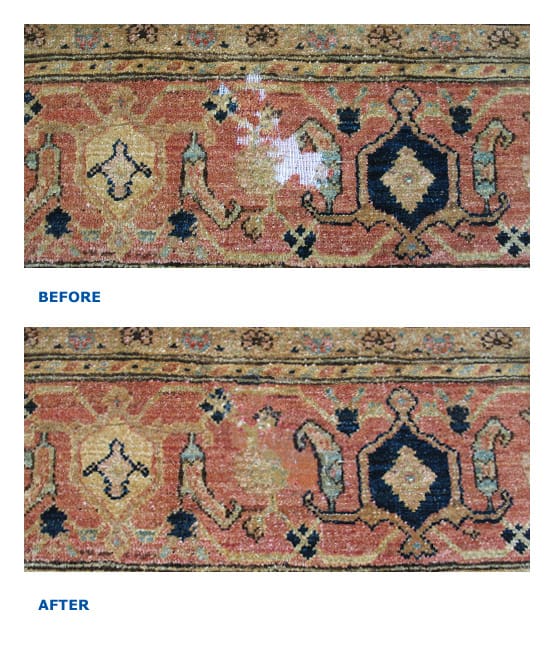
A Peshawar, rewoven.
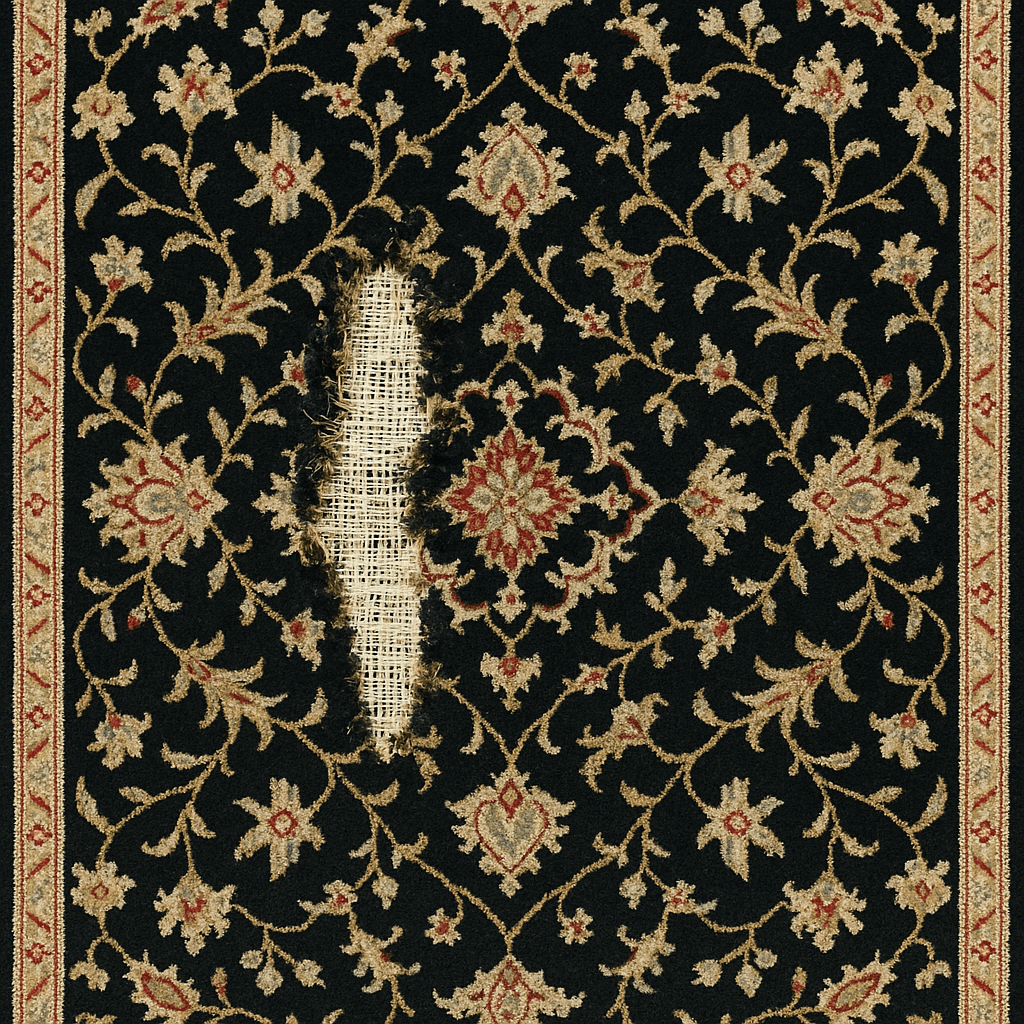
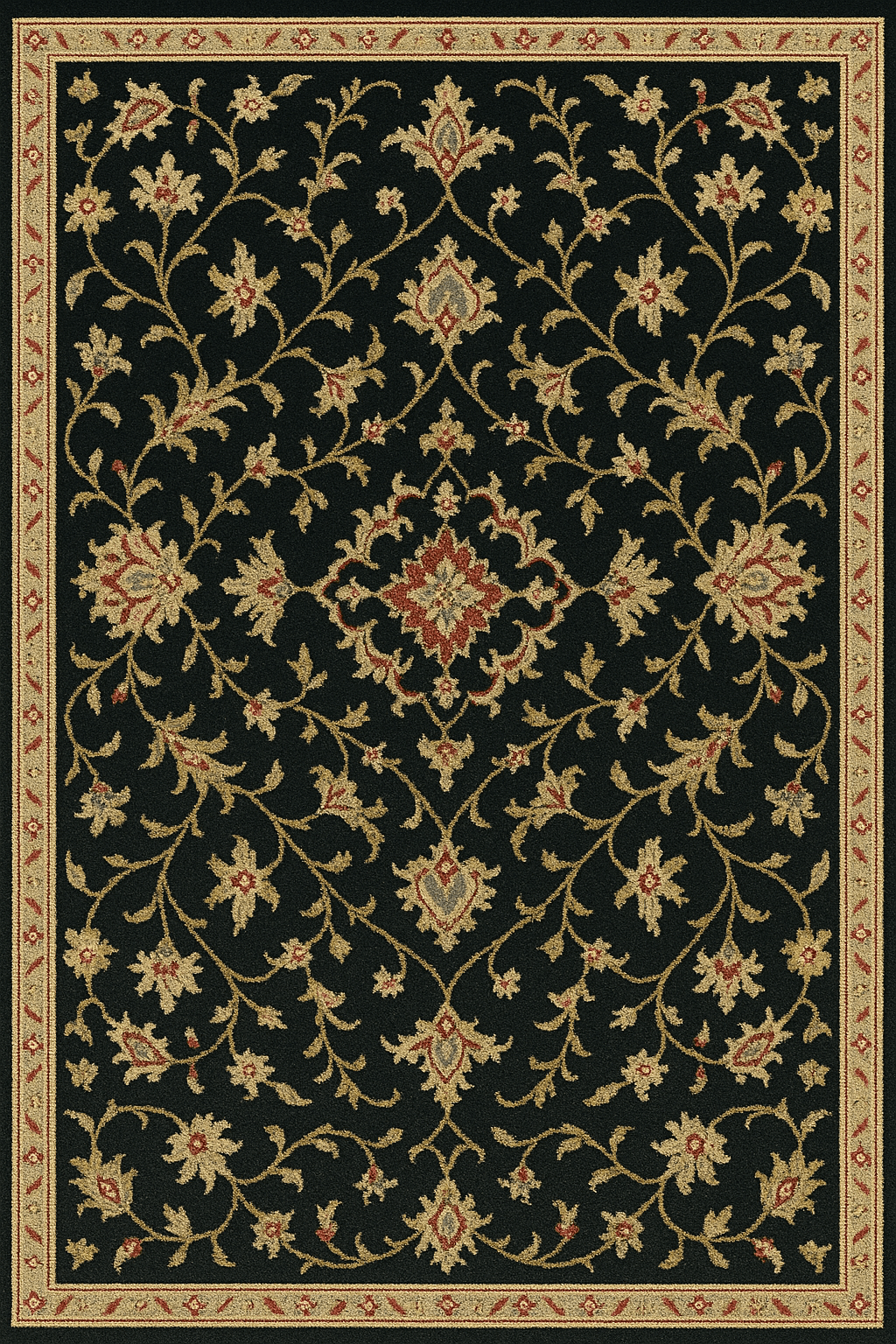
12 square inches of moth loss along the border — rewoven, groomed, cleaned.
What we work on
Reweaving by rug type.
- Persian — Kashan, Tabriz, Isfahan, Nain
- Oriental — Turkish, Chinese, Heriz
- Silk — tight-knot silk on cotton or silk warps
- Wool — high- and low-knot-count pile
- Antique — 80+ years, vegetable dyes
- Tribal — Turkoman, Baluch, Afghan
- Aubusson and European flat-weaves
- Modern hand-knotted — Pakistani, Indian
Insurance & estimates
Free estimates. Direct insurance billing.
Reweaving is the most common covered repair in water, fire, and pet-accident claims. We photograph the loss area, calculate square inches, write a clear scope-of-work letter, and bill State Farm, Allstate, AAA, Farmers, and most Bay Area carriers directly. You pay your deductible; we handle the claim.
Service areas
Free pickup & delivery across the Bay Area.
Reweaving FAQ
Common questions.
Will I be able to see the reweave?
If we’ve matched the wool, the dye, and the knot style, no. A trained appraiser can find it by knot pattern under magnification; a visitor to your home cannot. Our quality review is the check.
What if the warp is damaged too?
We rebuild it. A weft-reinforced foundation is rewarped by hand, then reweaved. This adds bench time and shows in the estimate.
How much can you reweave?
We have rewoven losses up to 3 feet by 4 feet on a single rug. Beyond roughly 20% of the total field, the cost approaches a replacement, and we will tell you so before we begin.
Can silk rugs be rewoven?
Yes, and they are some of the most beautiful reweaves we do — but the most expensive. Silk pile at 400-800 knots per square inch runs three to five times the per-square-inch price of wool.
How do you match the dye?
We mix natural vegetable pigments to match a hand-plucked wool sample from an inconspicuous area of the rug. The test is at daylight, not bench light. We iterate on the sample until the match reads correctly in the room the rug lives in.
Is a reweave permanent?
Yes — properly done, the new pile is structurally identical to the original and will age at roughly the same rate. The repair effectively becomes part of the rug.
Send us a photo
Bring it in or send a photo for a free estimate.
Photos of the loss area with a ruler for scale is all we need for a written estimate in 24 hours.