Rug Color Run Removal
Stop the bleed.
Save the rug.
When water floods a rug and the reds run into the ivories, hours matter. Emergency intake, dye stabilization, and cold-water reversal — the earlier we start, the more we save.
Starting price
Quoted on inspection — free estimate. Insurance accepted.
Localized bleed stabilization + wash. Large events quoted per rug.
Typical time on bench
Cold-water immersion cycles, dye-stabilizer treatment, controlled dry.
Emergency intake
Pickup within one business day of the call. Faster for active flooding.
We coordinate directly with flood-recovery and restoration companies.
What is color run removal?
Emergency intervention before reds become pink, and ivories become ruined.
Color run (also called dye bleed or crock) is what happens when a rug’s dyes release from their wool fibers and migrate into adjacent pile. The usual cause is water — a burst pipe, a roof leak, a washed-too-hot cleaning attempt. Vegetable-dyed antiques are especially vulnerable; reds fugitive into ivories, and once set, the stain is permanent.
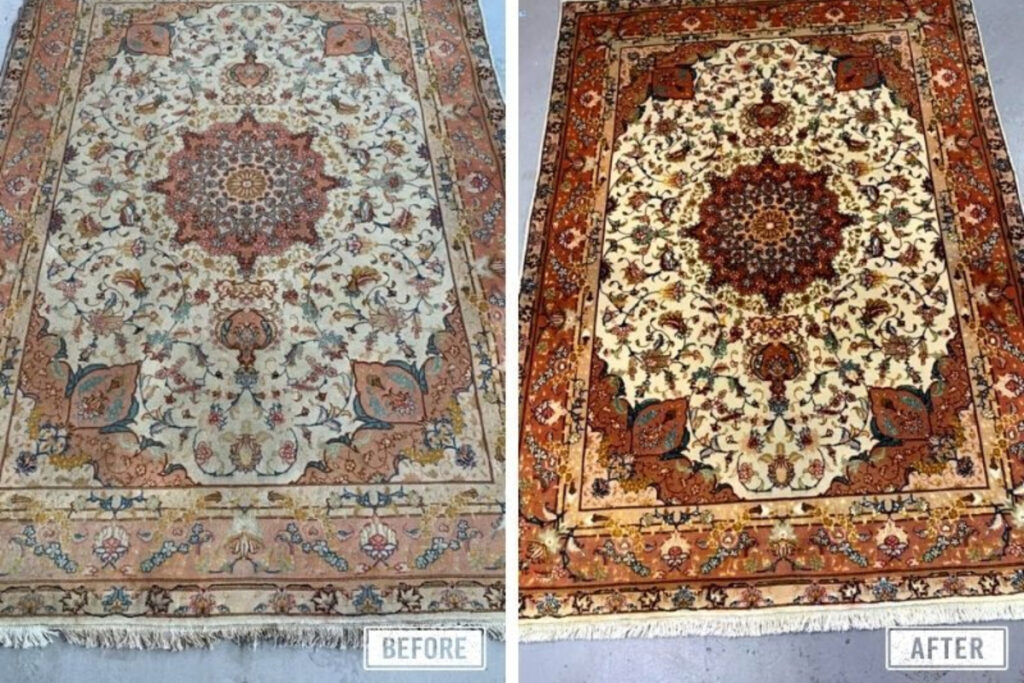
Color run removal is an emergency service. The first hours matter more than almost any other repair. In the first 24 hours, a wet rug can be stabilized and the bleed substantially reversed with cold water, dye fixatives, and careful extraction. After 48-72 hours, the dye begins to covalently bond with the adjacent fibers and reversal becomes harder. After a week, permanent damage is likely.
We keep dye-run protocol supplies stocked for exactly this service — chelating agents, enzymatic cleaners, cold-water tables, and dedicated flat drying space. Call us. Do not let the rug sit wet. Do not let anyone dry it with heat. Both make the problem worse.
Our process
Five steps from emergency to delivery.
-
Assess (on arrival)
Photograph condition on pickup. Test dye stability in multiple zones. Identify the bleed vector (flood, pet accident, prior wash). Move to bench within hours.
-
Stabilize
Cold-water immersion with dye-fixative chelators. This flushes free dye out of the pile before it can bond deeper into adjacent fibers. Multiple short cycles.
-
Reverse
Apply targeted enzymatic treatments to bleached ivories and migrated reds. Multiple gentle cycles rather than one aggressive wash. Test between cycles.
-
Blend & finish
Flat air-dry over 48–72 hours in a humidity-controlled room. Spot-re-dye any areas that could not be fully reversed, matched to surrounding field.
-
Quality review
A second master weaver confirms dye stability (no more runoff), color match in previously-affected zones, and foundation integrity. Certificate of treatment issued.
Case example
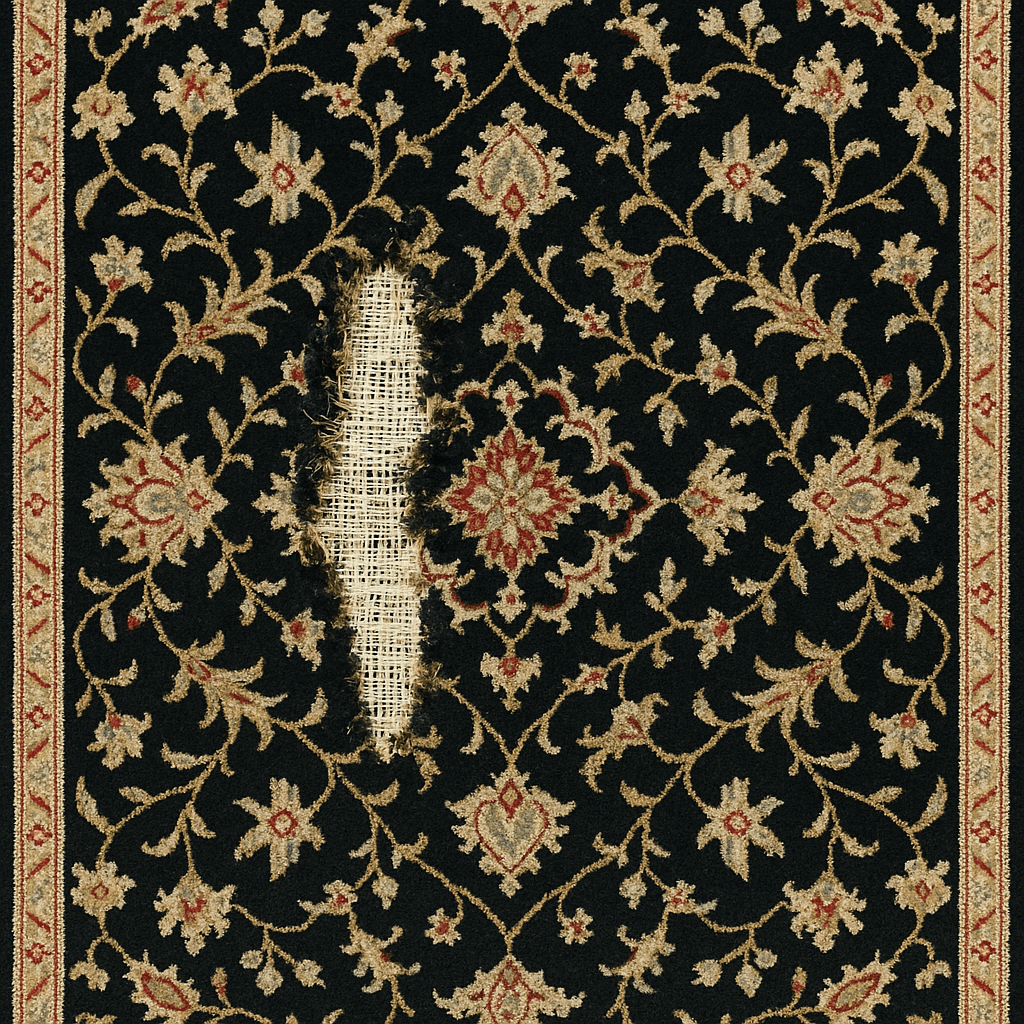
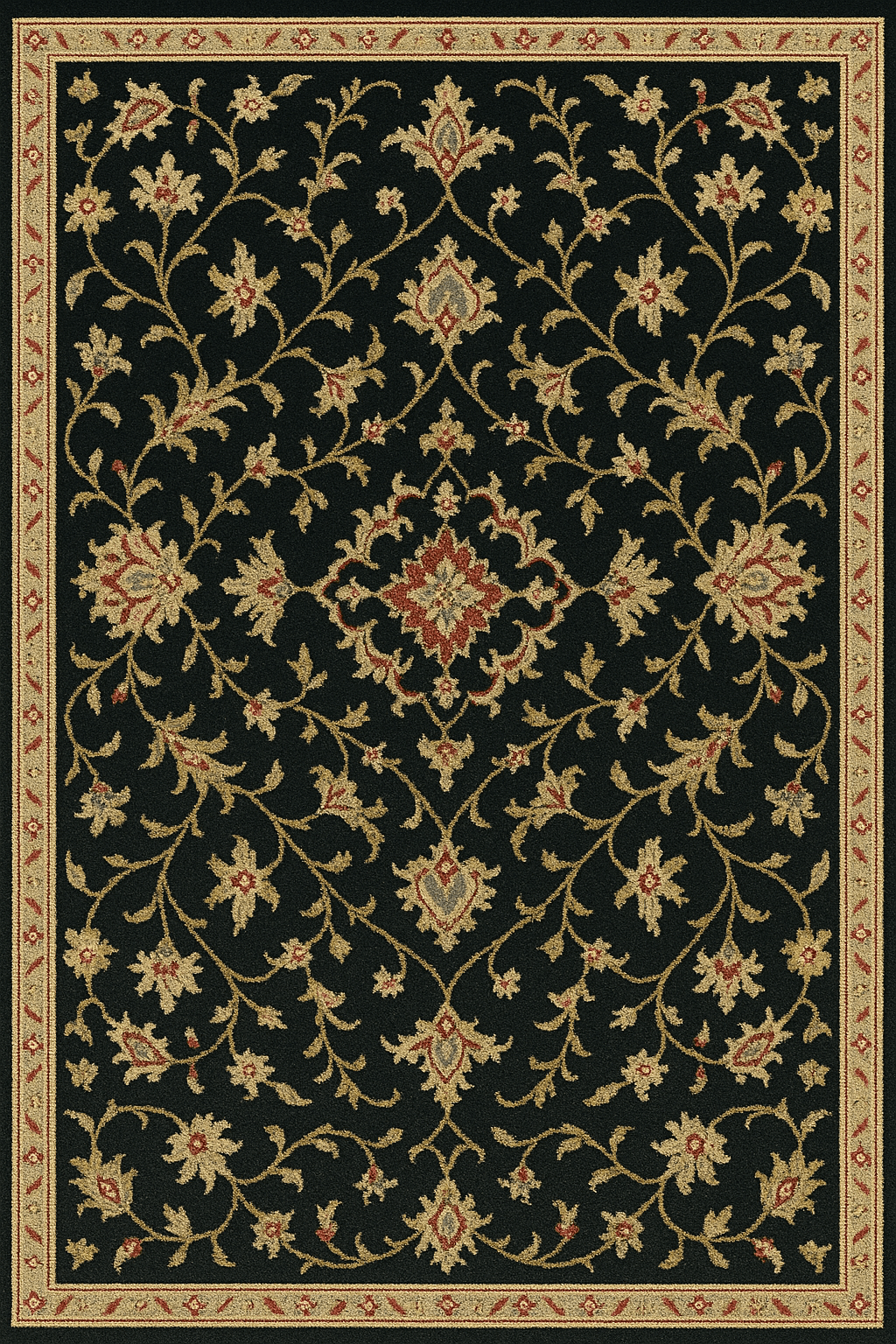
Palo Alto flood, nine weeks to delivery.
What we work on
Color run removal by rug type.
- Persian — vegetable-dyed antiques (high risk)
- Oriental — Turkish, Chinese, Caucasian
- Silk — immediate bleed risk from any moisture
- Wool — modern and antique wool piles
- Navajo — natural indigo-dyed flat-weaves
- Afghan and tribal — cochineal red migration
- Aubusson — chemical-dye bleed
- Any rug after a flood, leak, or pet event
Insurance & estimates
Emergency response. Insurance billed directly.
Dye bleed from a covered water event is almost always reimbursable under homeowner’s insurance. We document the rug’s condition on arrival, coordinate with adjusters, and bill State Farm, Allstate, AAA, Farmers, and most Bay Area carriers directly. You pay your deductible; we handle the claim paperwork. Time matters — call first, paperwork second.
Service areas
Emergency pickup across the Bay Area.
Emergency FAQ
Common questions.
My rug just got wet — what should I do right now?
Call us immediately at (650) 675-8160. In the meantime: do NOT apply heat (no hair dryer, no space heater). Do NOT roll the rug while wet if you can avoid it. If you can, lift the rug flat off the floor, put it on a pile of towels, and keep air moving across it. If the rug is dye-bleeding, putting it in a cool, dry, dark space stops the spread.
How quickly do I need to act?
Within 24 hours for the best outcome. Within 48 hours for a good outcome. After 72 hours, dye bonds become harder to reverse. We can still work on older bleeds, but results are limited — the early hours are where the rug is saved or lost.
Can you reverse a red that has stained an ivory area?
Usually yes, if the rug arrives within the first few days. We use chelating and enzymatic treatments to pull migrated dye out of the adjacent wool. Complete removal is common; sometimes a faint tonal shift remains, which we can then re-dye to match.
Will the rug ever be the same?
Often yes, visually. The rug may be structurally weaker in the flooded area if cotton warps swelled, and we may need to reinforce foundation as a follow-up step. But if the dye-bleed is reversed, the rug reads as the rug it was.
Do you work with restoration companies?
Yes. We partner directly with ServiceMaster, ServPro, and most Bay Area flood-recovery firms. If you are in the middle of a remediation, have your project manager call us.
What if the bleed is from a bad prior wash?
We can still help. Attempted at-home or amateur washes that bled dyes are a common intake for us. The older the attempt, the harder the reversal — but we have succeeded on rugs that were washed incorrectly a year ago.
Call first, paperwork second
Bring it in or send a photo for a free estimate.
If the rug is wet right now, call us before doing anything else. For non-emergencies, send photos and we reply within 24 hours.