Moth repellent
Before they eat.
Or while they do.
Preventative spray treatment for stored or low-traffic rugs plus active eradication for rugs with visible larva activity. Cedar, lavender and IGR-grade insecticide — safe for wool, safe for kids.
Why it matters
You never see the moth.
You see the damage.
A clothes moth lays 40 to 60 eggs at a time, typically under furniture where the light and traffic are lowest. Larvae hatch and eat wool, silk, felt and pile for two to six months before pupating. The moth itself does no damage and lives less than a month — by the time you see one, the generation that ate your rug is long gone.
The only way to stop the cycle is to treat the rug directly. Our protocol combines a cedar-and-lavender natural repellent pass for everyday households with an IGR-grade (insect growth regulator) spray treatment for rugs with active infestation. The IGR is food-grade-safe, persists for 12+ months, and interrupts the larval molt so no eggs ever become adults.
Rugs in storage or low-traffic rooms should be treated every 12 months; high-use rugs every 24. A ten-dollar-per-square-foot treatment prevents a thousand-dollar reweave.
What’s included
Two treatments, one approach.
Preventative pass
Cedar-lavender mist plus a light IGR spray for clean rugs with no active infestation. Invisible, unscented in 24 hours.
Active eradication
Heavy IGR spray plus 6-hour ozone chamber treatment for rugs showing larva, casings, or active moth adults.
Foundation coating
Back of the rug gets the full treatment — most larvae live underneath, not in the pile.
12-month warranty
If you find active moth in a treated rug within 12 months of treatment, we re-treat at no charge.
Pricing
Two tiers, flat-rate.
Moth treatment
Preventative from $95. Active eradication from $195 and priced by rug size and infestation level after inspection.
- Preventative: $95 (up to 9×12)
- Active + ozone: from $195
- Bundled 10% off with cleaning
- 12-month warranty on both
Moth treatment process
Four steps to stop the cycle.
-
Inspection
Under strong light and magnification we look at both sides of the rug for adult moths, casings, frass, and visible larva trails. This determines preventative vs. active treatment.
-
Clean first
Moth larvae eat soiled wool over clean wool. A 12-step hand wash removes the feeding substrate and kills most active larva at the same time.
-
Treatment spray
Either a natural cedar-lavender blend (preventative) or IGR plus pyrethrin (active) applied to both sides, allowed to bond as the rug dries.
-
Ozone finish (active only)
For rugs with active infestation, a 6-hour ozone cycle penetrates any remaining eggs that surface spray cannot reach.
When to treat
Four moments to call us.
Before storage
Any rug going into storage for more than 3 months should be treated. Moths find stored rugs fast.
Under furniture
Rugs under beds, sofas, or heavy chests see no light and no traffic. Treat once a year.
After moving
Moving-truck rugs spend hours with other people’s infested belongings. A preventative pass before placement is cheap insurance.
Active infestation
You’ve seen moths flying or small bare patches on the pile. Stop reading and call. Time matters.
Pickup & delivery
Across the entire Bay Area.
Moth FAQ
What you need to know.
Is the treatment safe for kids and pets?
Yes, once fully dried (24 hours). The IGR we use is food-grade-compatible and the pyrethrin is derived from chrysanthemums. We do not use mothballs or other napthalene-based products, ever.
Will my rug smell like cedar afterward?
Faint scent for two to three days on a preventative treatment; gone entirely within a week. Active-eradication rugs come back odor-free because the ozone oxidizes the pyrethrin carrier.
How often should I re-treat?
Every 12 months for stored rugs and low-traffic areas; every 24 months for rugs used daily. We send reminder emails on your treatment anniversary if you ask.
Do I need to treat the floor underneath?
Sometimes. If we find larva on the back of the rug we recommend also vacuuming and spraying the baseboards and floor beneath the rug — we will point out the spots.
Can moth damage be repaired?
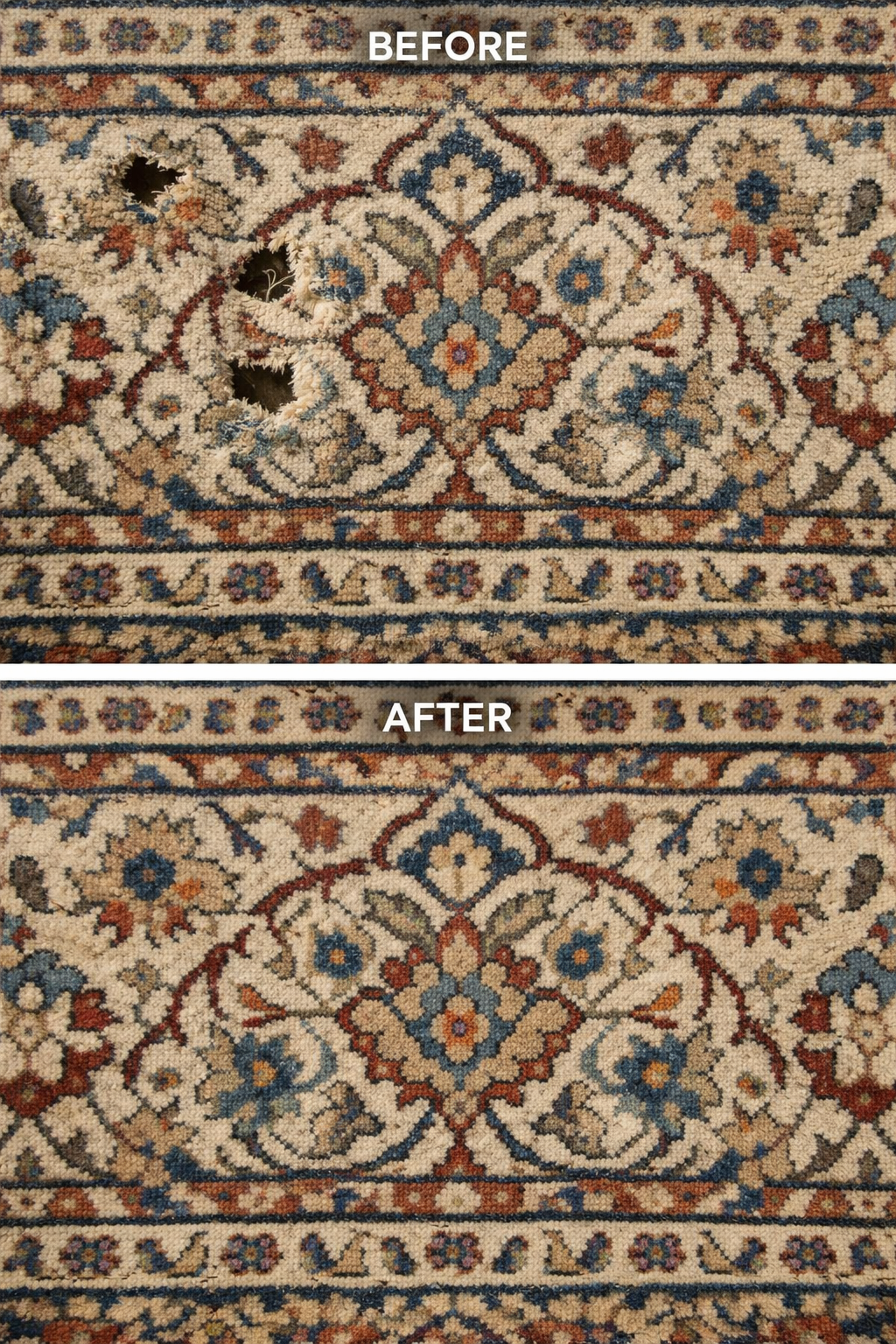
Yes. Our reweavers can rebuild moth-eaten areas on the original warp with matched hand-spun wool. See our repair page for details; we handle treatment and repair in one pickup.
Does cleaning alone kill the moths?
A hot-water immersion wash kills most but not all. For an active infestation you need the IGR plus ozone step. For prevention on a clean rug, a natural treatment alone is enough.
Related services
What pairs with moth treatment.
Prevention is cheaper than reweaving
Treat a rug for under $100.
Free pickup anywhere in the Bay Area. We inspect and quote before any treatment begins.