Rug Restoration
Heirlooms, saved.
Foundation up.
Full antique restoration — foundation reinforcement, reweaving, color matching, and conservation cleaning. For rugs that have seen a century and have another to go.
Starting price
From $299 — full antique conservation.
Full restoration is scoped rug by rug. Written estimate before work begins.
Typical time on bench
Complex multi-step work: foundation, reweave, color, finish.
Door-to-door
Includes conservation wash, repairs, and grooming before delivery.
Restoration quotes sit outside the standard repair pricing table — every heirloom is scoped individually.
What is rug restoration?
Not repair. Not reproduction. Conservation.
Restoration is the multi-step work of returning an antique rug to stable, usable, beautiful condition without erasing its age. It usually involves foundation reinforcement (re-warping weak sections of cotton or wool), selective reweaving of lost knots, hand-spun color matching, and a conservation-grade hand wash — all in the correct sequence, which changes rug to rug.
The philosophy matters. A good restoration preserves the evidence of the rug’s life: the natural patina of its vegetable dyes, the slight irregularity of hand-spun wool, the wear patterns that come from real use. We do not “bring it back to new” because a rug was never supposed to be new. We bring it back to itself.
Restoration is also the most time-consuming and expensive work we do. A mid-sized Heriz or Tabriz restoration can run six to twelve weeks on the bench, with three to five different master weavers handling discrete stages. The rugs that merit this investment are typically over 80 years old and carry real monetary and sentimental value.
Our process
Five stages of restoration.
-
Assess
Full photographic condition report. Identify fibers, dyes, knot density, pre-existing repairs, and damage. We return a conservation plan before any work begins.
-
Match materials
Hand-spin new wool to match twist, ply, and gauge of the original. Mix natural vegetable dyes to match the field. Source cotton or wool warp thread if the foundation needs rebuilding.
-
Execute
Foundation repair first. Then reweaving — knot by knot on the existing or reinforced warp. Then fringe, overcasting, and kilim-end work as needed.
-
Blend & finish
Conservation wash — cold water, pH-neutral, by hand — to set the new wool into the patina of the rug. Flat air-dry over 48 hours. Shear new pile to match surrounding height.
-
Quality review
Two master weavers sign off. We issue a written certificate of restoration, a photographic record, and (if needed) an updated appraisal for insurance.
Before & after
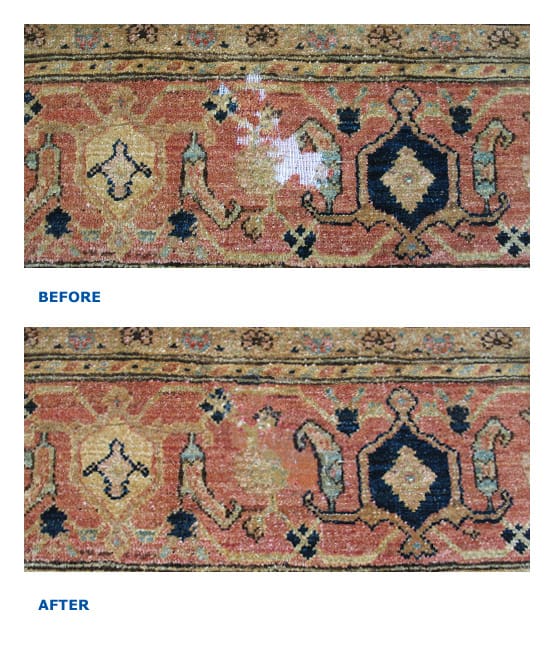
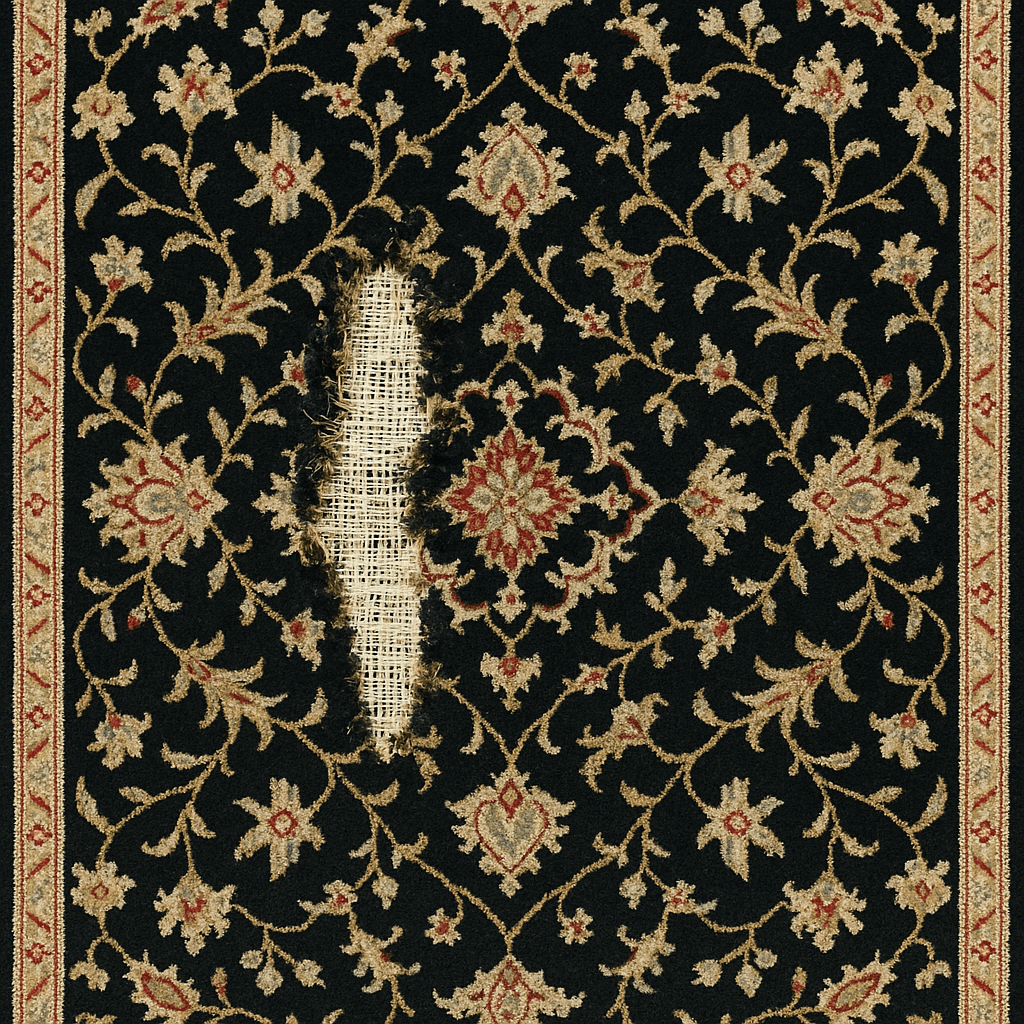
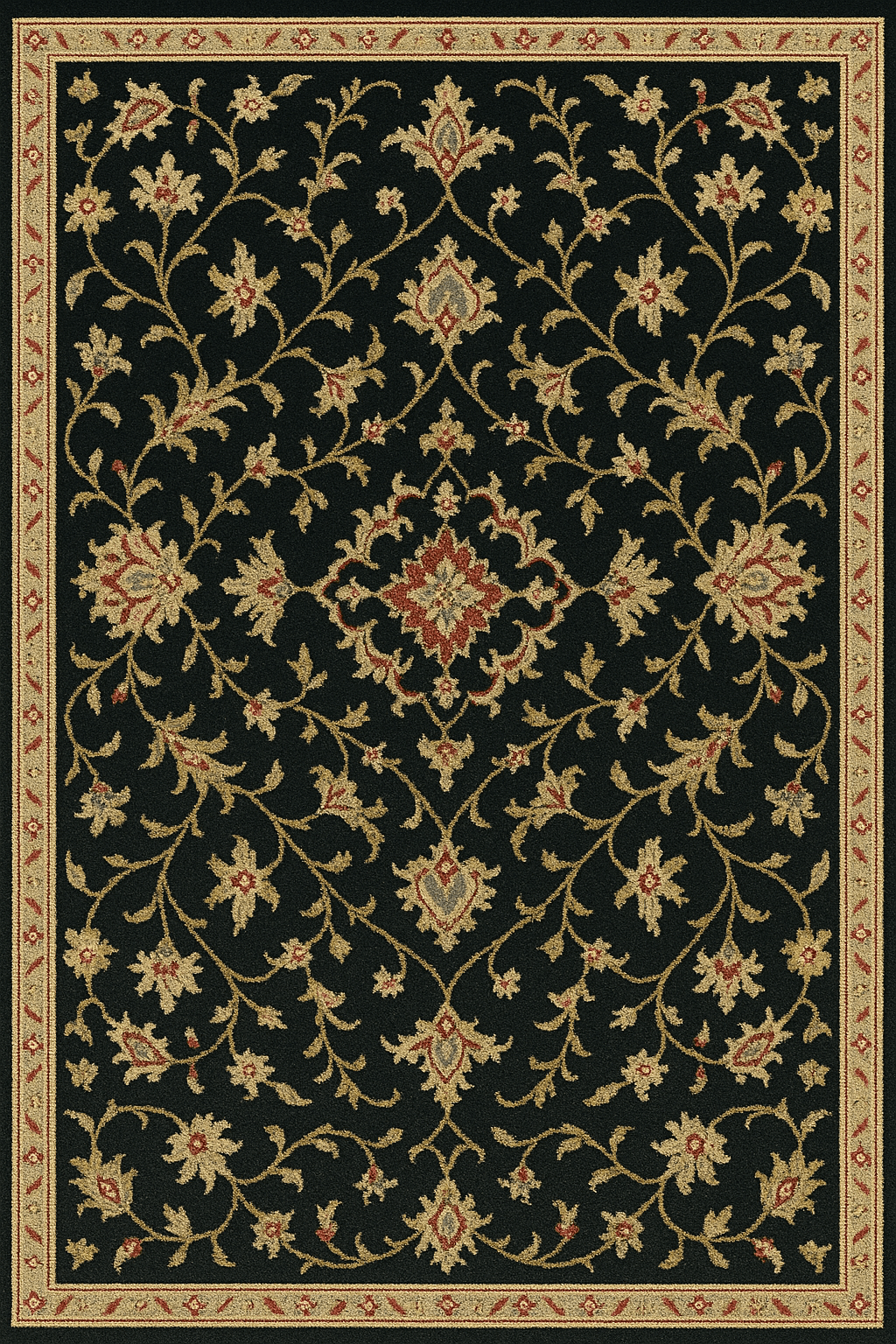
A Peshawar, a century on.
What we work on
Restoration by rug type.
- Antique Persian — 19th C. Kashan, Tabriz, Sarouk, Heriz
- Antique Oriental — Turkish Oushak, Chinese, Caucasian
- Antique Silk — Qum, Hereke, Tabrizi silk-pile
- Antique tribal — Afghan, Baluch, Caucasian
- Antique Navajo — Germantown, Two Grey Hills
- Turkoman — Tekke, Yomut, Ersari
- European — Aubusson, Savonnerie
- Museum-grade — foundation documentation included
Insurance & estimates
Free estimates. Insurance claims welcome.
Restoration work is frequently covered under insurance when damage was caused by a flood, fire, or vandalism event. We prepare a detailed conservation plan, document the before-state, and bill State Farm, Allstate, AAA, Farmers, and most Bay Area carriers directly. For estates, we provide pre- and post-restoration appraisals for tax or settlement purposes.
Service areas
Free pickup & delivery across the Bay Area.
Restoration FAQ
Common questions.
How do I know if my rug is worth restoring?
A hand-knotted wool or silk rug over 50 years old is almost always a candidate. The inspection is free — we will tell you honestly if the restoration cost approaches the rug’s value, and what a partial repair might look like instead.
Will the restoration show?
To a trained eye, a well-restored rug still reads as a restored antique — the conservation philosophy is to preserve evidence of age, not hide it. To a casual viewer, the repair is invisible.
Can you restore a rug that is mostly destroyed?
Often yes, if the foundation is intact across most of the rug. We have restored rugs with 40-50% of the pile lost. Beyond that, the cost approaches the price of a comparable antique, and a reweave begins to feel like a reproduction.
Do you provide insurance appraisals after restoration?
Yes. We issue a written post-restoration appraisal with photographic record for insurance scheduling or estate purposes.
How much does full restoration cost?
Roughly $3,000 to $15,000 for a mid-sized antique, depending on damage extent and rug complexity. Silk and museum-grade pieces can exceed that. Every quote is written and scope-defined before work starts.
Can restoration save an antique rug after flood damage?
Almost always, if the rug was rescued within a few days of the flood. Water does its worst damage to vegetable dyes and cotton warp foundations — both of which are our specialties.
Send us a photo
Bring it in or send a photo for a free estimate.
Share a few photos and the rug’s history. We respond with a conservation plan and written estimate within 48 hours.