Rug Repair
Restoration,
not replacement.
Master weavers. Matched wool. Hand-spun dyes. For when the rug is worth saving — and almost always, it is.
What we do at the bench
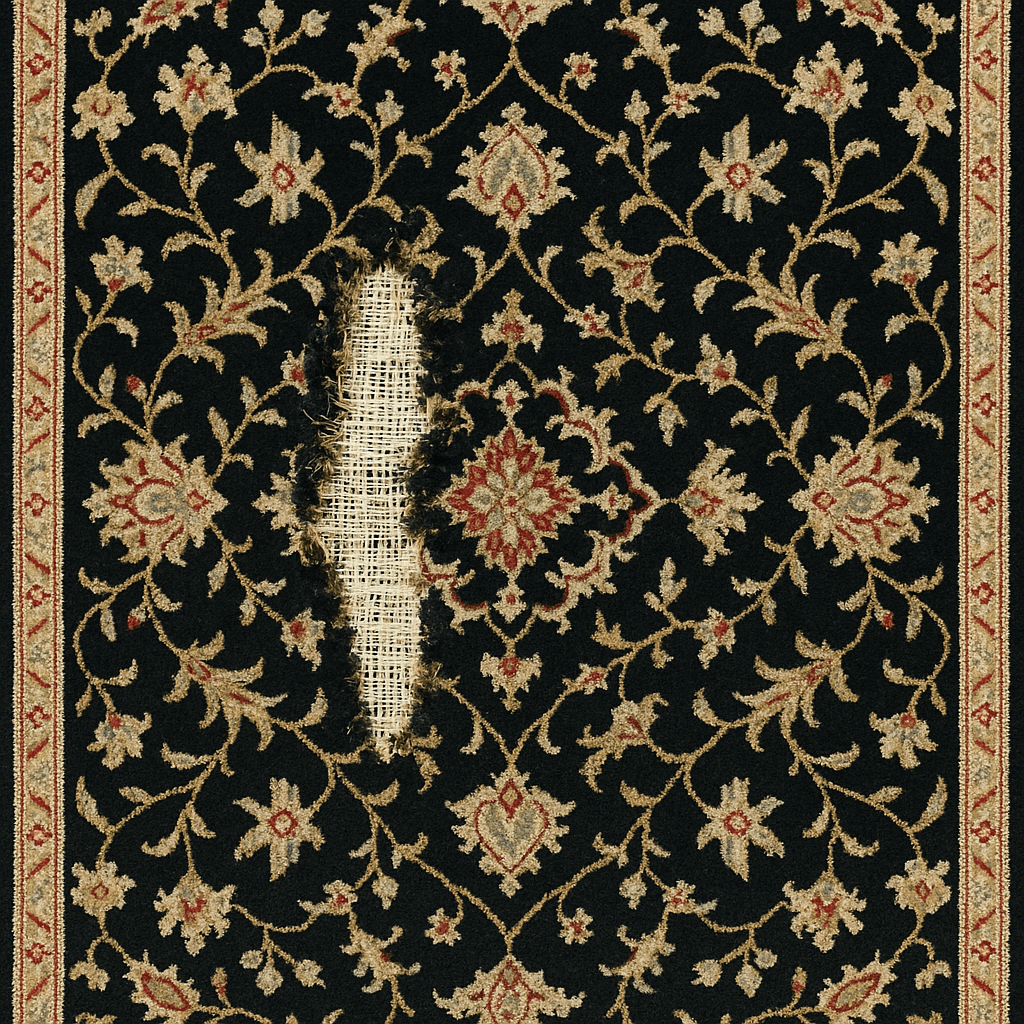
A hole, a bleed, a fringe gone soft.
Reweaving, color work, and fringe restoration — by masters who’ve been at this for thirty years and more. We restore the rug; we don’t reproduce it.
Fringe Repair
Reknot, rebind, or replace missing or frayed fringe with matched hand-spun wool.
Overcasting
Edge re-stitching to prevent unraveling on a rug whose binding has worn through.
Resizing
Cut down a too-large rug and re-finish with an invisible new border.
Restoration
Full antique revival — foundation up — for heirloom rugs that have seen a century.
Reweaving & Patching
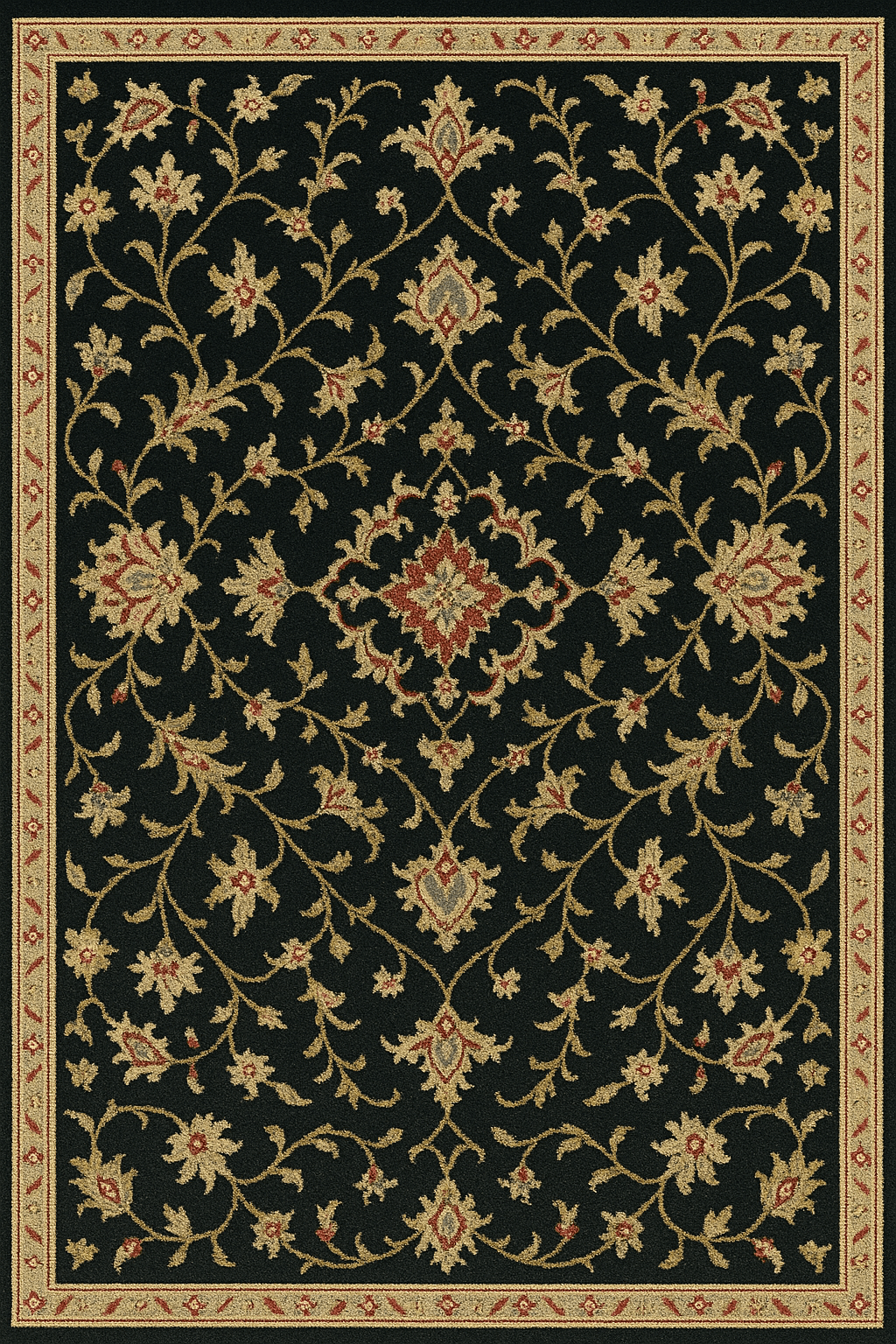
Knot-by-knot reweave on a matched warp, using wool hand-spun to match the surrounding field.
Serging & Binding
Finished edges on a cut or worn rug, with thread dyed to match the original field color.
Adding Leather
Leather-bound edges for durability and a decorative finish on high-traffic areas.
Color Re-Dying
Revive a sun-faded field or match new wool to the existing dye lot using natural pigments.
Color Run Removal
Reverse a dye bleed from flood or pet accidents and stabilize the affected field.
Moth Damage Repair
Reweave losses, wash out larvae, and coat the foundation with a natural moth repellent.
Before & after
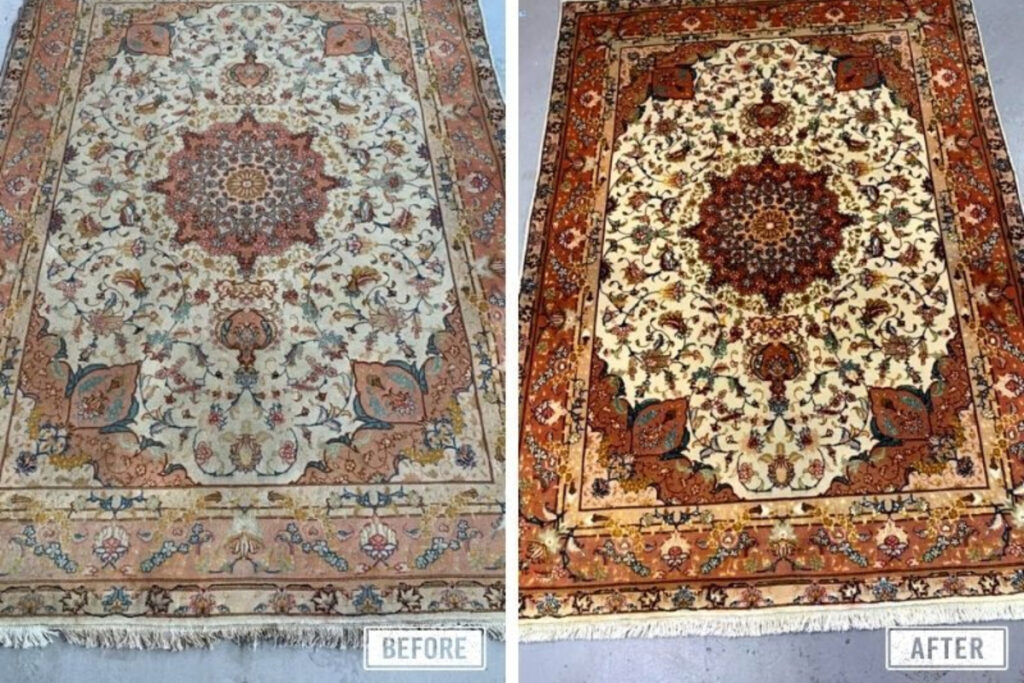
Color restoration on a 1950s Kashan.
Drag to see fifty years of sun-fade reversed with natural vegetable dyes.
The repair process
Five steps. One rug at a time.

-
Assess
Inspect damage on the bench. Photograph condition, identify fibers and dyes, scope the work.
-
Match materials
Hand-spin wool to match the original thickness and twist. Mix natural dyes to the rug’s existing field.
-
Weave
Knot-by-knot reweave or patch. Warps re-seated, wefts re-tensioned. Slow, by hand, on a traditional loom.
-
Blend & finish
Shear the new pile to match the surrounding height. Brush, comb, groom the field into the original.
-
Quality review
Second pair of eyes — a different master weaver inspects the repair and signs off before the rug is released.
Case study
100-year-old Tabriz: flood recovery.
In October 2024, a burst upstairs pipe flooded a Palo Alto dining room. The rug on the floor — a 1920s Tabriz inherited from the owner’s grandmother — sat in standing water for six hours before the pump truck arrived.
Under ultraviolet light on our bench the damage told its own story: forty percent of the field had dye that had gone soft, ready to bleed. The fringe was matted into a single cord. The foundation cotton warps had swollen and released knots along a 36-inch diagonal.
The work took nine weeks. Cold-water immersion with dye-stabilizers to arrest the bleed. A slow, flat drying regime in our humidity-controlled loft. A hand-spun wool reweave across the 36-inch damage line, matching a vegetable-dye ruby that we mixed new. Final grooming and a pad check.
The owner cried when she unrolled it. The insurance adjuster (we billed him directly) paid for the full cost. Her grandmother’s rug is back in the dining room, under the same table, ready for another hundred years.
Repair FAQ
Five questions we hear about every repair.
How long does a typical repair take?
Simple fringe or overcasting work: 3 to 5 days. Patch reweaving: 2 to 4 weeks. Full antique restoration: 6 to 12 weeks. You get a firm return date with every estimate, before any work starts.
Will the repair match — or will I see it?
If we have matched the wool and the dye well, you will have to know where the repair is to find it. We hand-spin wool to match twist and thickness and mix dyes from natural pigments. A sign-off from a second master weaver is part of the process — if the match isn’t invisible, we redo it.
Can you save a moth-eaten rug?
Almost always. Even if the loss is extensive, a master weaver can reweave on the original warp. The work is slow and priced by the square inch, but the rug comes back as itself — not a replacement, not a reproduction.
Do you bill insurance for water & pet damage?
Yes. We document the rug’s condition with photos and written statements, then bill major carriers (State Farm, Allstate, AAA, Farmers, and others) directly. You pay your deductible; we handle the claim paperwork.
Are there rugs you can’t repair?
A machine-made polypropylene rug, almost never worth the work. A hand-knotted wool rug: almost always. The honest test is the inspection — we’ll tell you up front if we think the cost of the repair exceeds the rug’s remaining value.
Ready when you are
Get a repair estimate.
Send us photos and a description. We’ll reply with a written estimate within 24 hours. Free inspection if the work is complex.