The 12-step Oriental wash
12 Steps.
One Oriental rug.
Seven days.
From bench inspection to insured delivery, twelve hand-performed stages on every Oriental rug. No machine. No shortcut. The same protocol the Karimi family has used since 1978.
Hand-performed steps
Each step done by a single craftsperson.
Door-to-door days
Pickup, wash, dry, deliver.
Years in Newark
Three generations of the same family.
The process
Twelve stages, in order.
Scroll. The image swaps as you read each step.
-
01. Arrival & intake inspection
The rug arrives at the bench. Photographed end-to-end under strong light, condition logged into your work order, and a stated value agreed for insured handling.
-
02. Identify weave, fiber and origin
Knot count, weave structure (Turkish or Persian knot), wool grade, dye chemistry and country of origin. The wash plan is built from what the rug actually is.
-
03. Compressed-air dust pass
Two passes on a padded table. The first lifts surface dust; the second works the foundation. A medium Oriental sheds two pounds of grit before water touches it.
-
04. Color-fastness test per dye
Cotton swab, pH paper, cold water. Every significant color field is tested for bleed risk. Reds and indigos are tested first — they fail first.
-
05. Cold-water immersion pre-wash
The rug is laid flat in a stainless tub, submerged in cold filtered water (50–55°F), and left to loosen embedded soil overnight. Warm water sets dye — never used.
-
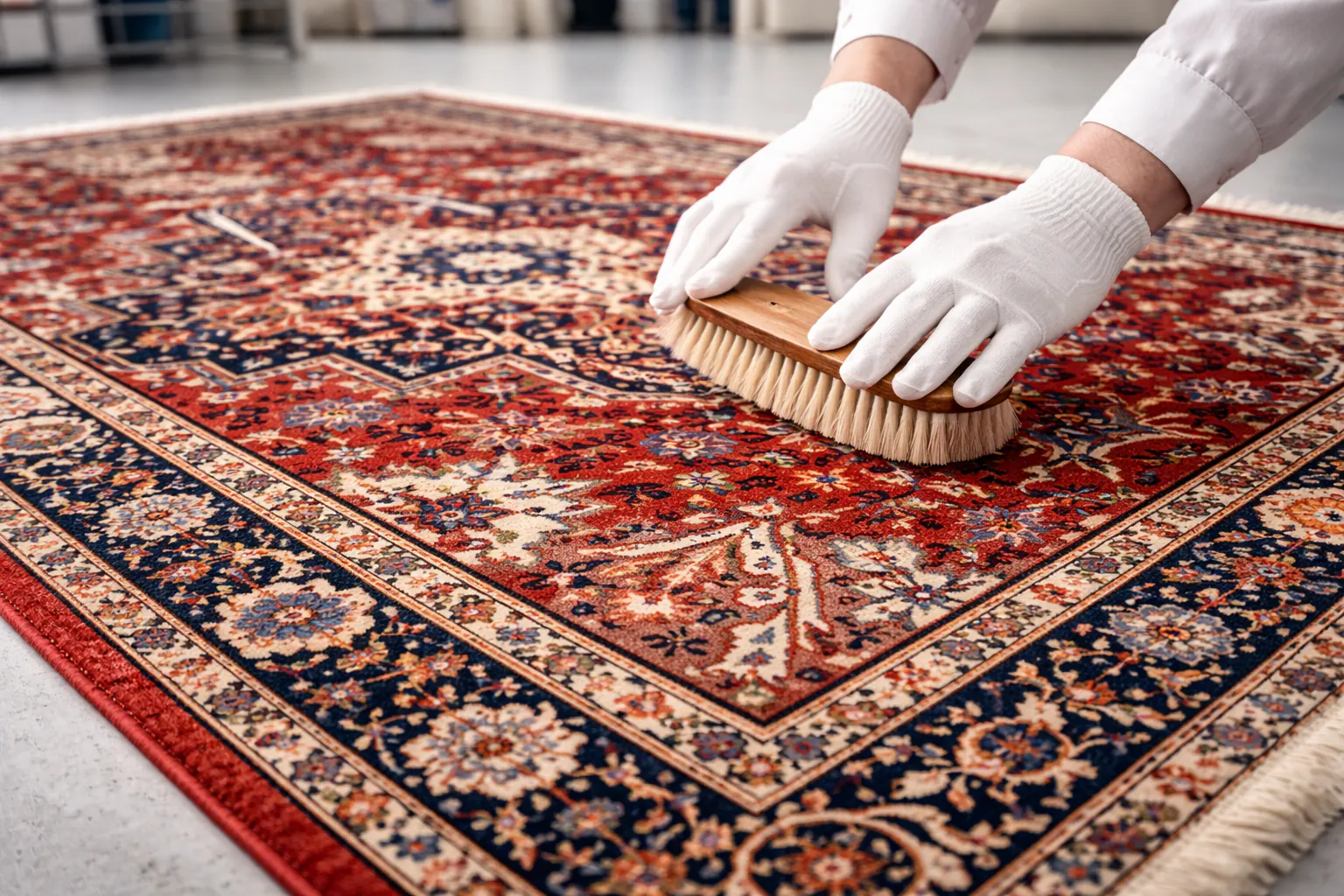
06. Hand shampoo with pH-neutral wool soap
WoolSafe-approved, biodegradable wool shampoo applied with soft horsehair brushes, by hand, with the nap. Lanolin is preserved — detergent strips it.
-
07. Hand rinse with soft brushes
Fresh cold water, low pressure, by hand. Rinsed until the water runs clear. Soap residue is the slowest killer of wool — we don’t leave any.
-
08. Fringe cleaning and brightening
The fringe, often gray after a decade of foot traffic, is cleaned separately with a mild oxidizing agent. Just enough to brighten; not enough to weaken the cotton warps.
-
09. Wide-vacuum water extraction
A wide vacuum head removes the bulk of the rinse water flat. No squeeze, no spin, no torque on the foundation.
-
10. Climate-controlled flat dry
Two to four days flat in our drying loft at 72°F and 70% humidity. Slow even drying keeps wool from cupping and fringe from curling.
-
11. Final inspection & pile grooming
A second master inspects the rug, hand-grooms the pile with the nap, combs the fringe and addresses any spot that needs a final targeted treatment.
-
12. Wrap, pack, insured delivery
Rolled on a protective tube, wrapped in breathable paper, delivered insured to your door by our own team. We unroll it back into place and check the lie.
Materials we use
Four ingredients. No shortcuts.
pH-neutral wool soap
Biodegradable, fluorochemical-free, WoolSafe-approved. pH 6.5–7.5. Preserves the lanolin in the wool fiber.
Cold filtered water
Municipal water run through a two-stage carbon and sediment filter, 50–55°F. Cold water locks dyes; warm water releases them.
Soft horsehair brushes
Natural bristle, wool-specific. No nylon or synthetic fibers ever touch the pile of an Oriental rug here.
70% humidity drying loft
Climate-controlled, 72°F, two-day minimum. Slow drying keeps wool flat and dye stable.
Why hand-wash beats machine cleaning
Twelve careful steps will outlive forty-five rushed minutes.
A rotary steam cleaner cleans the top thirty percent of an Oriental’s pile in under an hour. It uses hot water with detergent, which can set or bleed the dye and strips the lanolin out of the wool fiber. The rug looks better for two weeks then dulls down faster than before. The damage compounds. After three machine cleanings the pile loses its hand and the dye loses its depth.
Hand-washing is slower, costs more on the front end and lasts longer than the rug-owner. Cold water keeps the dye in. pH-neutral wool soap keeps the lanolin in. Submerging the rug for the wash gets the foundation as clean as the surface, which is where the odor and embedded grit live. A flat slow dry keeps the rug shaped like a rug.
A hand-knotted Oriental washed this way every three to five years will look better at fifty than it did at twenty. We have customers bringing in rugs their grandmothers brought in first.
Book your pickup
Twelve steps start with one phone call.
Tell us about your Oriental rug. Free pickup within 24 hours. Written estimate before any work.