Stain how-to · Grass
How to Remove Grass Stains from a Rug
Chlorophyll bonds tight. Vinegar lifts the pigment, dish soap handles the sugars. Spot-test before you start.
Time to act
Difficulty
Tools needed
Chlorophyll plus sugars plus tannin.
Grass stains have three components: chlorophyll (the green pigment), tannins (the brown undertone), and natural sugars. Each needs different handling. Vinegar lifts chlorophyll; dish soap dissolves sugar; a final clear-water rinse takes both off the rug.
The stain seems to disappear under cold water but a green or brown shadow often remains. The vinegar step is what removes that residual shadow.
Step-by-step
Work through these in order.
1. Cold water rinse
Pour cold water onto the stain to flush as much pigment as possible. Blot up. Repeat three times.
2. Vinegar + dish soap solution
One tablespoon white vinegar + one teaspoon clear dish soap in one cup cold water. Apply with a damp white cloth from outside in. The vinegar lifts the chlorophyll.
3. Soft brush in the direction of the nap
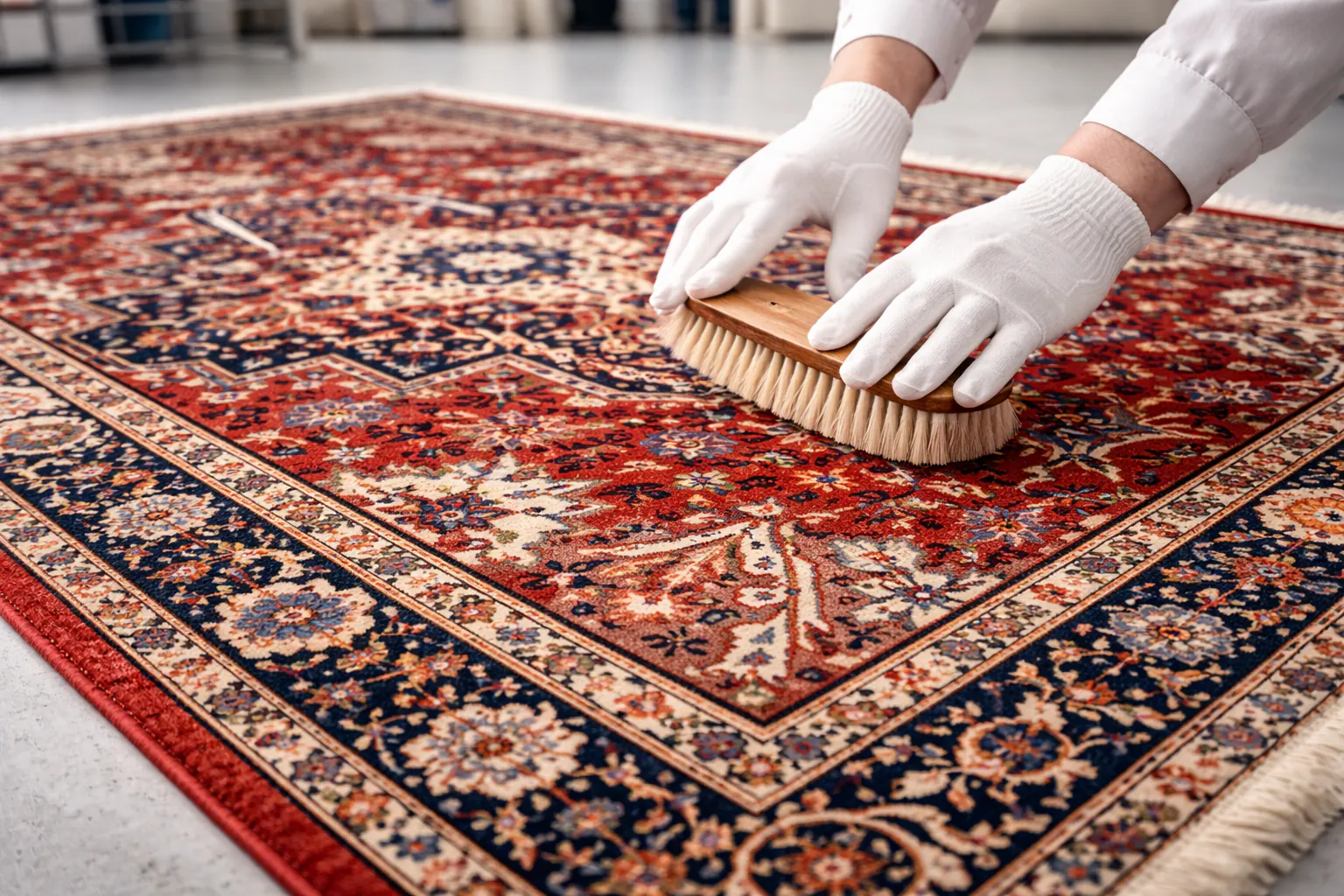
Use a soft natural-bristle brush (not stiff plastic) to gently work the solution into the pile, in the direction of the nap. Never against. Never aggressive.
4. Rinse with clean cold water
Mist cold water on, blot up. Repeat until no soap or vinegar comes up on the cloth.
5. Dry flat with weight
Stack absorbent towels with a book on top, leave overnight.
What NOT to do
Common mistakes that make it worse.
Don’t rub aggressively. Aggressive scrubbing pushes chlorophyll deeper and can pill the wool.
Don’t use ammonia on wool. Ammonia is alkaline and damages wool fiber. Vinegar (acidic) is the right choice.
Don’t use hot water. Hot water can shift wool dyes adjacent to the stain.
Don’t skip the spot test. Always test the vinegar+dish soap on a hidden corner first.
For wool, silk & antique rugs
Stop. Call us. Do not DIY.
If your rug is wool, silk, antique, hand-knotted, or has any sentimental or financial value, please don’t try to remove the grass stain yourself. Wool dyes can shift, silk can dull permanently, and antique foundations can tear under the wrong solvent. Call us first — free pickup, free written estimate, insured handling.
For machine-made polyester or polypropylene area rugs in everyday rooms, the steps below are safe to attempt — but stop if the stain spreads or the color lifts.
Get a free estimateWhen to call a pro
A simple decision tree.
- The stain is older than 24 hours. Set grass stains need a professional extraction approach — home methods will set them further.
- The rug is wool, silk, antique, or hand-knotted. Always call a pro. Always.
- The stain is larger than 6 inches across. A large stain needs a full-rug rinse to avoid a halo and a tidemark.
- The dye is lifting or the color is bleeding. Stop immediately and call — further work will spread the bleed.
- You’ve tried two products and it’s still there. The third try usually creates damage. Save the rug.
Related stain guides
More how-tos.
Stain too far gone?
Let our team handle it.
Free pickup, written estimate, no obligation. Forty-seven years of stain-rescue experience at the Newark atelier.
Questions
Quick answers.
Why are grass stains so hard?
Grass contains chlorophyll, a natural pigment that bonds tightly to fiber proteins. Combined with sugars and tannins, it’s a multi-component stain that needs more than just water.
Can I use a laundry stain stick?
For synthetic rugs, yes — rub a small amount in, dwell, blot. Test first. Never on wool or silk.
What about an oxygen-based bleach?
Oxygen bleach (sodium percarbonate) lifts grass on synthetic rugs but can dull wool dyes. Always spot test on a hidden corner.
Will grass stains come out of an outdoor rug?
Outdoor rugs (polypropylene) tolerate stronger cleaners. A diluted oxygen bleach plus dish soap usually lifts grass cleanly.